BRAVO BiH

Current projects

Second Chance: Project Recap

Guided by a consortium of experts in inclusive education, textile design, and entrepreneurship from Slovenia (Taka Tuka), Sweden (Drivhuset), Egypt (Galala University and Fashion & Design Center), Bosnia and Herzegovina (BRAVO), Albania (Albanian Skills and Albania Craftsman Education), 25 young people are working together to learn about sustainable practices in the fashion industry and to enhance both their entrepreneurial and upcycling skills. These experts serve as mentors who provide support, guidance, and feedback to the participants throughout the development process.

Second Chance: Project Recap Read More »
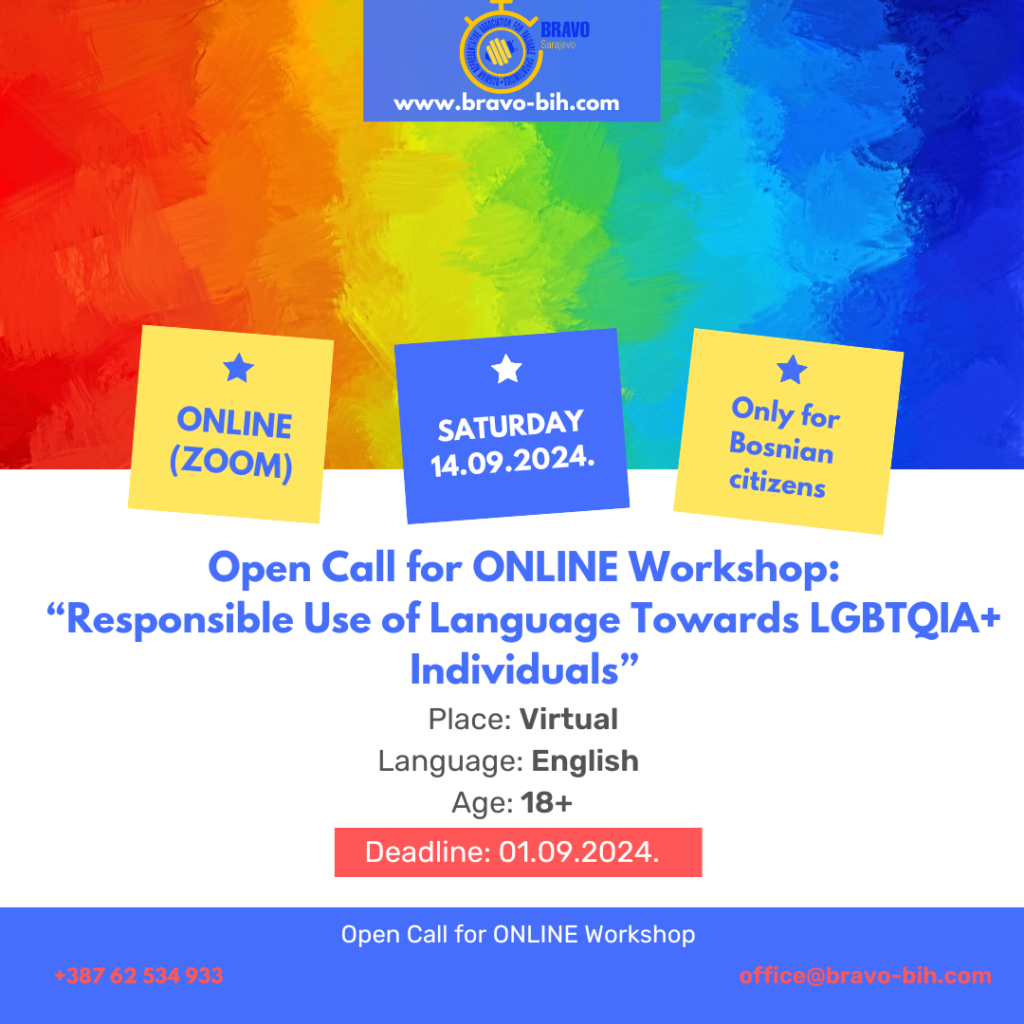
Open call for 45 participants for the Training Course “Responsible Use of Language Towards LGBTQIA+ Individuals” VIRTUAL

The general aim of the project is to prevent homophobic cyber-bullying among young people: a form of bullying that takes place over digital devices and platforms like mobile phones, computers, social media and tablets perpetrated against LGBTQI youth (lesbian, gay, bisexual, transgender, queer and intrasexual).

Open call for 45 participants for the Training Course “Responsible Use of Language Towards LGBTQIA+ Individuals” VIRTUAL Read More »

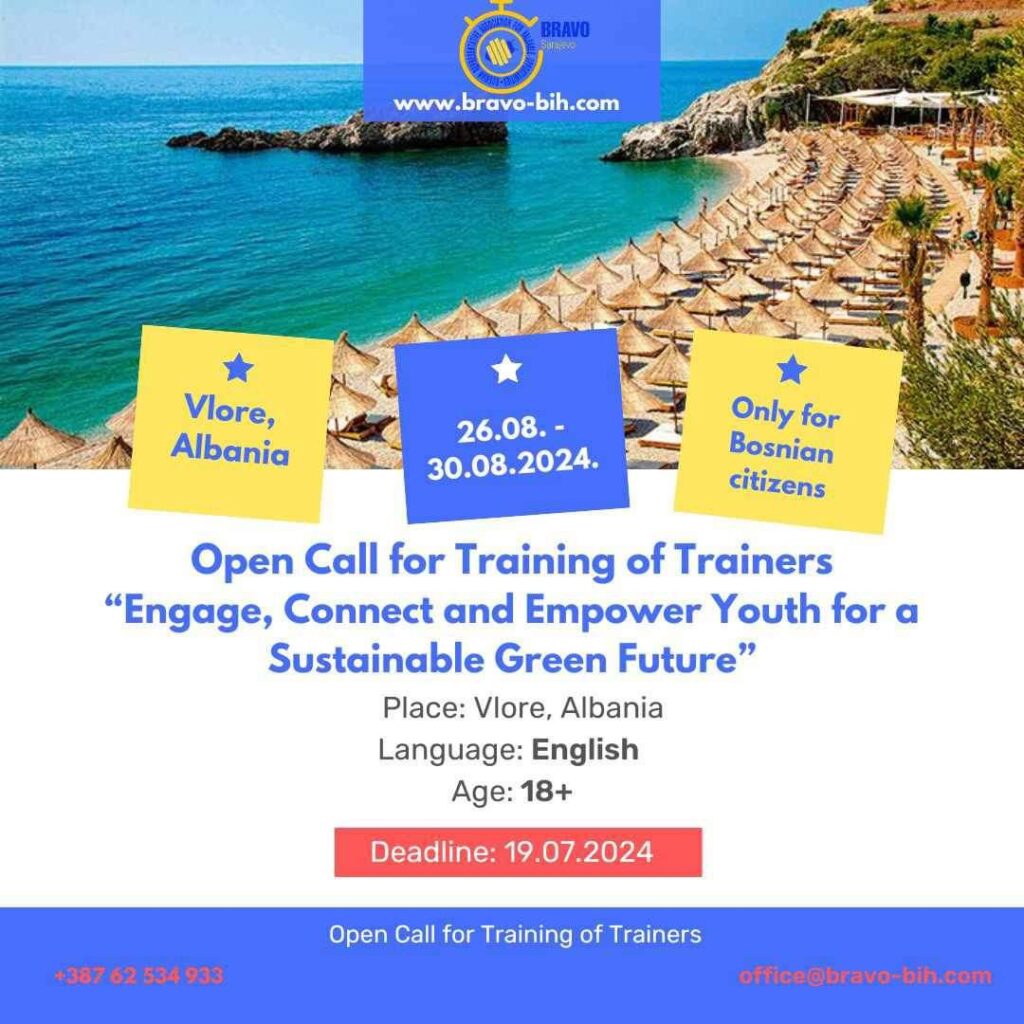
Open Call for 5 Participants for Training of Trainers in Vlore, Albania

Training of Trainers (ToT) in Vlorë, Albania: aims to enhance capacity building in the field of youth, benefiting non-formal learning providers, staff, youth, and key stakeholders, promoting climate change awareness, environmental digitalization, climate-oriented technologies, innovation, research, and partnerships to contribute to the Sustainable Development Goals (SDGs).

Open Call for 5 Participants for Training of Trainers in Vlore, Albania Read More »

“Embracing Sustainability: Circular Economy, Plastic Craftwork, and Co-Design in Bosnia, Poland, and North Macedonia”

As global environmental challenges intensify, Bosnia, Poland, and North Macedonia are uniting to champion sustainability through the principles of the circular economy, plastic craftwork, and co-design. This collaborative project aims to foster eco-friendly innovation and community empowerment by drawing inspiration from successful initiatives in other countries, such as Tunisia’s vibrant second-hand clothing industry. Building on each country’s unique strengths and perspectives, this partnership aims to create a model of sustainable development that can be replicated elsewhere.

“Embracing Sustainability: Circular Economy, Plastic Craftwork, and Co-Design in Bosnia, Poland, and North Macedonia” Read More »

“Starting Small: Circular Economy Initiatives in Sarajevo”

In 2020, Bosnia and Herzegovina (BiH) formalized its commitment to the circular economy by adopting the Green Agenda for the Western Balkans, a roadmap aligned with the European Green Deal to achieve climate neutrality and environmental sustainability. According to the European Parliament, circular economy refers to the practice of “sharing, leasing, reusing, repairing, refurbishing and recycling existing materials and products as long as possible.”

“Starting Small: Circular Economy Initiatives in Sarajevo” Read More »

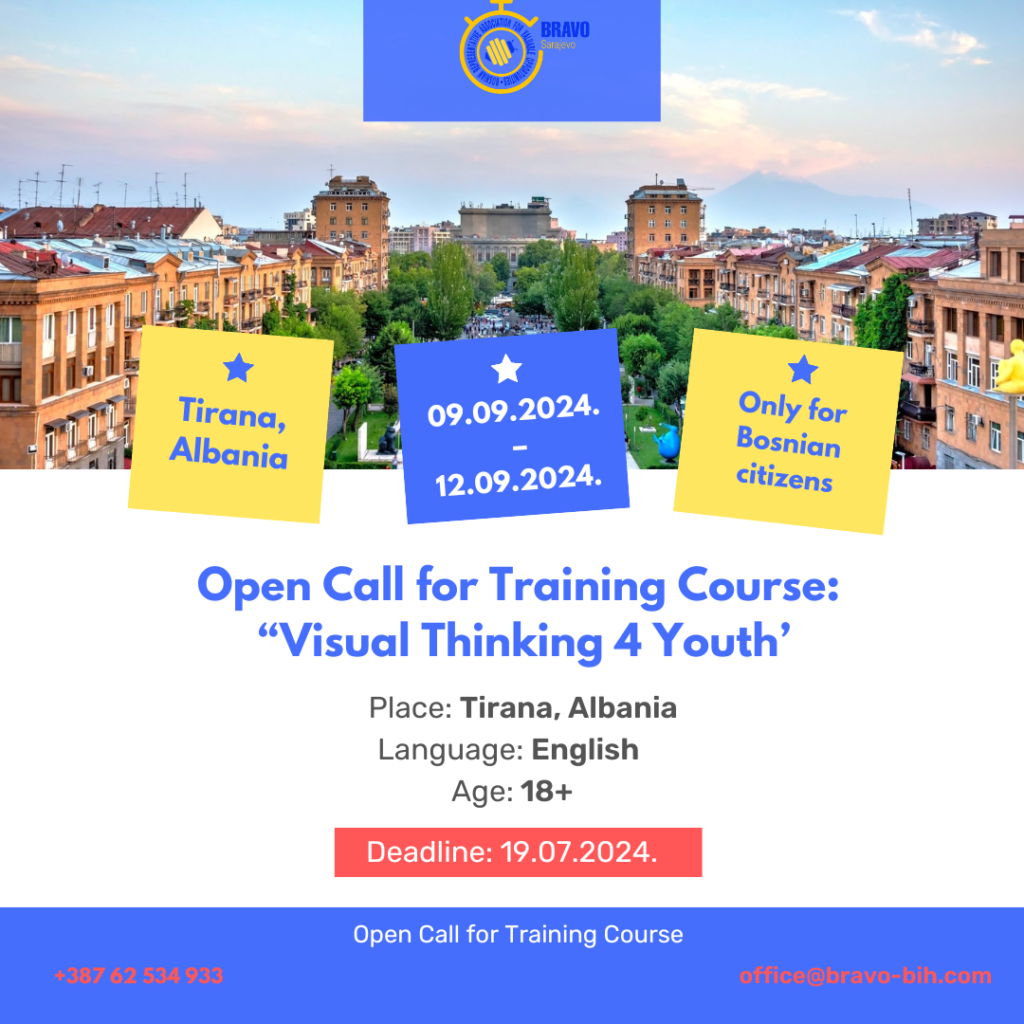
Open Call for 8 Participants for Training Course in Tirana, Albania

The Visual Thinking 4 You(th) project, has the general objective of promoting the social inclusion of dyslexic young people between 13 and 19 years old, through visual thinking, which consists in transmitting and exposing ideas through simple and easily recognizable images. The objective of this method is to improve the learner’s learning level by allowing him, through the use of images, to better understand ideas, define objectives, identify problems and generate new concepts and it is particularly effective for those who have cognitive peculiarities such as dyslexic people.

Open Call for 8 Participants for Training Course in Tirana, Albania Read More »

“Fashion industry and the Importance of Upcycling”

Upcycling is the transformative process of turning waste materials, unwanted products, or by-products into new, higher-value items. Unlike traditional recycling, which often involves breaking down materials into their basic components for the creation of new products, the term “upcycling” was coined in 1994 by German engineer Reiner Pliz who explains in the British monthly magazine “Salvo,” “I call recycling down-cycling. What we need is up-cycling, thanks to which old products are given a higher, not a lower, value.”

“Fashion industry and the Importance of Upcycling” Read More »