Spot the Fake: Why Media Literacy Matters More Than Ever
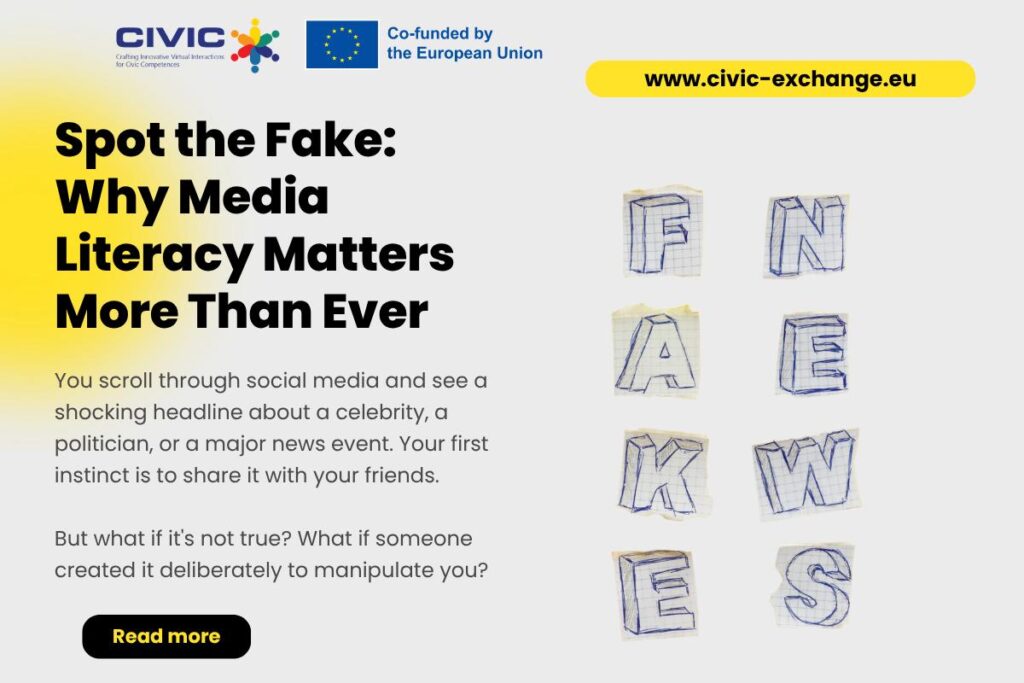
You scroll through social media and see a shocking headline about a celebrity, a politician, or a major news event. Your first instinct is to share it with your friends. But what if it’s not true? What if someone created it deliberately to manipulate you?
Welcome to the world of misinformation – and the reason why media literacy has never been more important.
Fake news isn’t new, but it’s definitely getting more sophisticated. Nowadays, it’s not just about false stories anymore. We’re living in an era where deepfakes can make it look like politicians said things they never said, where AI can generate convincing images of events that never happened, and where algorithms on social media actively push sensational content – whether it’s true or not – because it gets engagement.
❝ It influences how we vote, what we buy, and how we treat each other. And in countries still working through divisions and rebuilding trust after conflict, false narratives can be particularly dangerous.❞
The impact goes far beyond just being confused about the news. Misinformation fuels polarization. It can damage people’s reputations. Perhaps most troubling is this: many young people don’t even realize they’ve encountered misinformation. They can’t identify it, and they don’t know how to check whether something is true before they share it with others.
Media literacy isn’t about becoming a journalist or a fact-checker. It’s about developing critical thinking skills that help you navigate the information landscape with confidence. It means asking questions like:
These are skills we should all have, regardless of our age or background. Yet in many schools and universities, media literacy isn’t taught systematically. Young people are expected to figure it out on their own – and many don’t. The difference between healthy debate and misinformation.
Here’s something important, questioning information doesn’t mean rejecting everything you disagree with. There’s a big difference between:
Learning to spot the difference is what media literacy is about.
So how do you actually spot fake news? Here are some practical strategies:
Check the source. Is the information coming from a reputable news organization with editorial standards, or from a random account with no history? Look for author information and organizational credibility.
We’re at a turning point. The information environment is becoming more complex and more contested. Governments, corporations, and various groups are all competing for our attention and trying to shape what we believe.
❝ The power to resist manipulation and think critically isn’t a luxury – it’s a necessity.❞
Young people who have strong media literacy skills won’t just protect themselves. They’ll be better equipped to participate meaningfully in democracy, to build careers that require critical thinking, and to help others around them navigate misinformation too.
This is exactly why CIVIC is launching online exchange rounds focused on media literacy. Over the coming months, we’ll be bringing together young people from across Europe to explore these questions together, share practical skills, and learn from each other’s experiences.
Whether you’re frustrated by misinformation, curious about how the media works, or just want to become a sharper consumer of information, these sessions will give you tools and perspectives you won’t find elsewhere.
In our virtual exchanges, you’ll have the chance to:
Media literacy isn’t something you learn once and then forget about. It’s a skill you develop by practicing, by making mistakes, and by learning from others who are thinking critically too.
CIVIC’s online rounds will give you the space to do exactly that – in a supportive environment with young people who care about getting things right.
Keep watching for registration details. When the first rounds open, we hope you’ll join us. Because in a world full of noise, the ability to spot the truth matters more than ever.