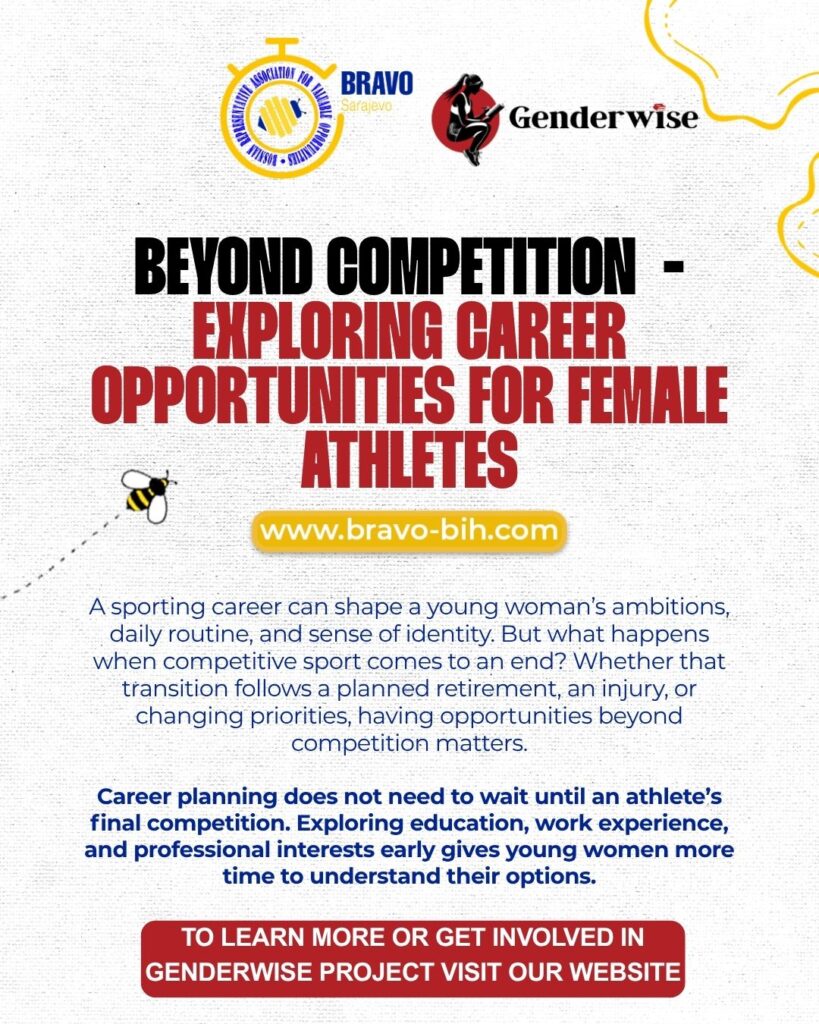
A sporting career can shape a young woman’s ambitions, daily routine, and sense of identity. But what happens when competitive sport comes to an end? Whether that transition follows a planned retirement, an injury, or changing priorities, having opportunities beyond competition matters.
Through its focus on dual careers, the GENDERWISE project encourages young female athletes to explore their professional interests while they are still active in sport. Preparing for the future can help them build on their sporting experience and discover where their skills and ambitions might take them next.
Planning for Life Beyond Competition
Career planning does not need to wait until an athlete’s final competition. Exploring education, work experience, and professional interests early gives young women more time to understand their options.
The process can begin with simple questions: Which activities do I enjoy outside training? What would I like to learn? Which parts of the sports sector interest me most?
For some athletes, the next step may remain closely connected to sport. Others may choose a different field. Both paths deserve support, and neither diminishes the value of their sporting achievements.
Opportunities Within the Sports Sector
Athletes understand many aspects of sport through direct experience. They know the demands of training, the importance of communication, and the practical challenges of competition. That perspective can be valuable in several professional roles.
Coaching is one possible pathway, allowing former athletes to support the development of others. Depending on the sport and role, this may require recognised qualifications and further training.
Sports management and administration offer additional opportunities, including coordinating programmes, supporting club operations, organising events, and working with partners. Communication roles may involve promoting sporting activities, engaging communities, or sharing athletes’ stories.
Young women may also become involved in projects focused on inclusion, youth development, and equal opportunities in sport. Each pathway combines sporting knowledge with additional skills that can be developed through education and practical experience.
Exploring Careers Outside Sport
A future career does not have to remain within the sports sector. Young female athletes may have interests in business, education, technology, the creative industries, or other fields.
Sporting experience can provide useful examples of teamwork, commitment, and responding to challenges. However, entering a new profession also means understanding its requirements and developing the relevant knowledge.
Career guidance can help athletes identify suitable study programmes, training opportunities, or entry-level roles. Short placements, volunteering, and conversations with professionals can provide a clearer picture of everyday work before they make longer-term decisions.
Making Space for Exploration
Exploring future opportunities can be difficult alongside a demanding training schedule. Schools, universities, clubs, and employers can help by offering guidance and opportunities that take sporting commitments into account.
A short work placement outside the competition season, a flexible learning programme, or a conversation with a career adviser can be a useful starting point.
Mentors can also share their experiences of moving from competitive sport into employment. Their stories can help young athletes understand that career development often involves trying different options, learning new skills, and adjusting plans along the way.
Recognising the Personal Side of Transition
Leaving competitive sport can bring changes beyond employment. Athletes may miss the structure of training, the connection with teammates, or the sense of purpose associated with competition.
Support should therefore consider the person as well as the professional pathway. Maintaining supportive relationships, exploring new interests, and having space to discuss the transition can help young women navigate this period.
There is no single timeline or destination that works for every athlete. The aim is to give each young woman the information and support she needs to make choices that reflect her circumstances and ambitions.
How GENDERWISE Contributes
GENDERWISE supports young female athletes aged 14 to 26 through educational resources, digital learning opportunities, and mentoring. By developing transferable skills relevant to coaching, management, and leadership, the project helps participants prepare for opportunities beyond their competitive careers.
For BRAVO, this means supporting young women in recognising their potential and exploring how they would like to use it. Sporting experience can be an important foundation, while education, guidance, and practical opportunities help turn future interests into achievable next steps.
MORE ABOUT THE PROJECT
GENDERWISE is a 30-month initiative funded under the Erasmus+ Sport programme, bringing together seven partners from six European countries. The project promotes gender equality in sport and supports dual careers for young female athletes through educational resources, online learning, and mentoring.
Stay tuned as BRAVO continues sharing GENDERWISE activities and perspectives on supporting young women throughout their sporting and professional journeys.