
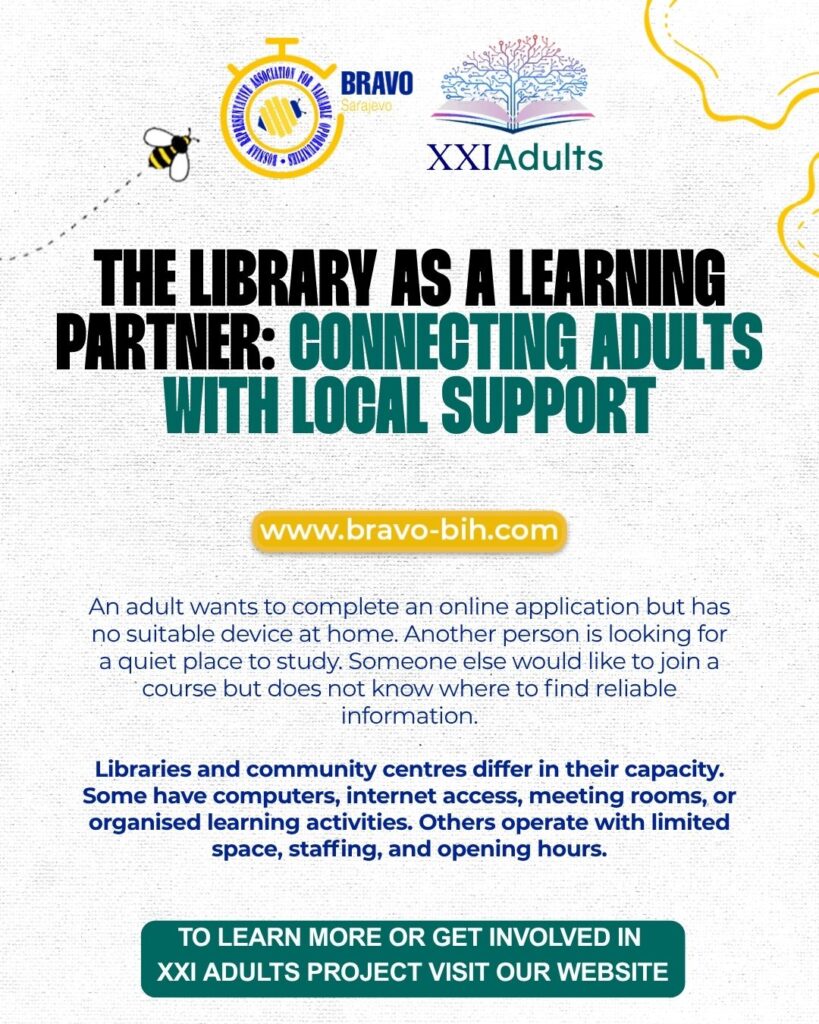
An adult wants to complete an online application but has no suitable device at home. Another person is looking for a quiet place to study. Someone else would like to join a course but does not know where to find reliable information.
A local library or community centre may offer a starting point. Depending on its facilities and services, it can provide access to resources, space for learning, and contact with people who can help identify the next step.
For adult education providers, working with these local institutions creates opportunities to bring learning closer to everyday life. Within the context of XXI Adults, such partnerships offer a practical way to explore accessibility, digital participation, and continued learning.
Understanding What Is Available Locally
Libraries and community centres differ in their capacity. Some have computers, internet access, meeting rooms, or organised learning activities. Others operate with limited space, staffing, and opening hours.
A partnership should begin with an accurate understanding of what each organisation can provide.
Educators can discuss available facilities, accessibility, equipment, and staff responsibilities. They should also check whether learners need membership, advance booking, or a payment to use particular services.
Clear information helps avoid directing someone to support that is unavailable. It also allows partners to plan activities that fit their actual resources.
Creating a Welcoming First Contact
Entering an unfamiliar educational setting can feel difficult, especially for adults who have been away from organised learning for many years.
A local venue can provide an opportunity to ask an initial question, explore available resources, or attend a short introductory activity. The experience should be easy to understand from the moment someone arrives.
Signs, course information, and registration instructions can explain where to go and whom to ask. Staff should know the purpose of the activity and how to refer questions they cannot answer.
A brief orientation can introduce the space, explain available support, and allow participants to become comfortable before the learning session begins.
Supporting Access to Devices and Connectivity
For some learners, access to a computer and an internet connection can make participation possible.
Partners should check that the available equipment supports the intended activity. A course may require headphones, a particular programme, or the ability to save and retrieve work.
Shared devices also require attention to privacy. Learners can practise signing out of accounts, locating downloaded files, and following the venue’s procedures for personal data. Demonstrations should use fictional information where possible.
Organisers should explain whether participants can return to use the equipment between sessions. Knowing the booking process and available hours helps learners plan independent practice.
Offering Practical Digital Learning Sessions
A local partnership can begin with a focused activity that addresses a familiar task.
Participants might learn to organise files, prepare a document, search for course information, or use an online learning platform. The session should have a clear goal and enough time for practice.
Educators can provide accessible instructions that learners can revisit afterwards. Staff at the venue should understand what support is expected from them and which questions need to go back to the educator.
A short session can also help identify demand for further learning. Participants may reveal related tasks they would like to practise or barriers that need attention before a longer course is planned.
Helping Adults Find Reliable Information
Libraries can be useful partners in activities that involve finding and evaluating information.
An educator and library staff member might develop a session on locating original sources, checking publication dates, or distinguishing an official service page from promotional content.
Participants could work through a practical question, such as finding the entry requirements for a course. They would identify the responsible provider, locate its current information, and prepare questions about anything unclear.
The learning goal is a repeatable process. Adults should leave with a clearer understanding of how to search, check, and decide where further clarification is needed.
Connecting Learners with Other Opportunities
A library or community centre may be able to share information about local courses, language learning, employment support, or community activities.
Any referral should be based on current, verified information. Staff need to know what the service offers, who it is intended for, and how someone can contact it.
A simple directory can help, provided responsibility for updating it is agreed. Outdated schedules or contact details can make a learner’s next step unnecessarily difficult.
Where a question requires specialist support, the local venue can help identify the relevant organisation. Staff should have a clear understanding of the limits of their own role.
Providing Space for Continued Practice
Learning often requires opportunities to revisit a task after the course session ends.
A suitable local space can allow adults to practise with equipment, review materials, or work alongside other learners. Depending on available resources, partners might arrange an optional practice period or a small study group.
The arrangements should be clear. Participants need to know whether an educator will be present, what assistance staff can offer, and how to request a place.
Peer learning can be encouraged without expecting participants to take responsibility for one another’s difficulties. Everyone should have access to a suitable route for additional help.
Agreeing on Responsibilities
A workable partnership needs more than a shared interest in adult learning.
Partners should agree who prepares materials, handles registration, provides equipment, communicates changes, and responds to access requests. They should also clarify responsibility for personal information and any work saved during activities.
Staff time needs to be considered realistically. A busy library team may be able to host a session while having limited capacity to provide individual teaching afterwards.
Starting with a manageable activity allows both organisations to learn what the partnership requires before expanding it.
Asking Learners Whether the Support Works
Participants can help partners understand whether the venue and arrangements make learning easier.
Useful questions include: Could you reach the location? Were the opening hours suitable? Could you use the equipment? Did you know where to ask for help?
Feedback should be possible through more than one method. A short conversation, written form, or private message may suit different participants.
Partners can then identify specific improvements, such as clearer booking instructions, an alternative session time, or materials in a more accessible format.
Local Learning Partnerships within the XXI Adults Vision
Adapting adult education to contemporary needs includes considering where learning takes place and what support adults can access between sessions.
Within the context of XXI Adults, libraries and community centres offer a practical setting for exploring local cooperation. Suitable spaces, reliable information, and access to resources can help learners take the next step towards their goals.
A successful partnership begins with clear responsibilities and an understanding of local needs. It develops through activities that people can use, feedback that informs improvements, and realistic plans for continued support.
For an adult beginning a new learning journey, a familiar place and a clear point of contact can make that first step more achievable.
#XXIAdults #BRAVO #BRAVOBIH #AdultEducation #Libraries #CommunityLearning #DigitalInclusion #LifelongLearning #ErasmusPlus
#BRAVO #BRAVOBIH #MAKETHEWORLDWONDER #ERASMUSPLUS
