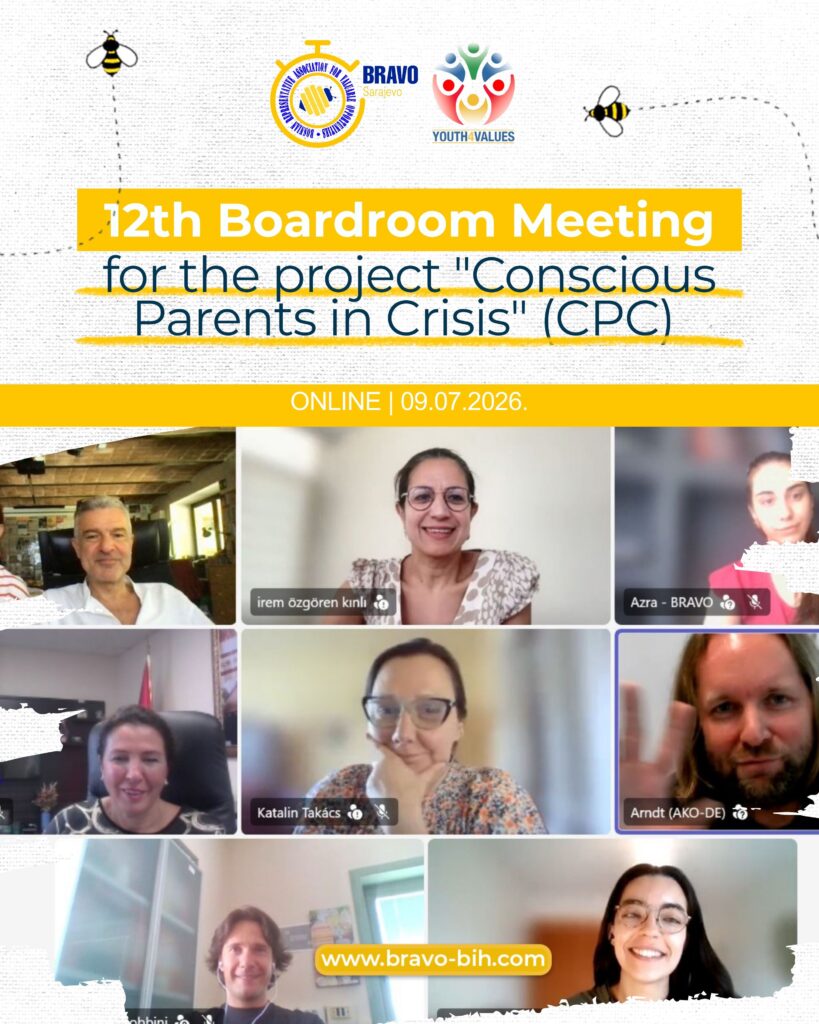
On July 8th, 2026, the international consortium for the “Conscious Parents in Crisis” (CPC) project gathered for its 12th International Boardroom Meeting to review progress and align strategies for the final phases of the project.
The meeting marked a pivotal moment for the CPC consortium, as partners reviewed key milestones and set a clear roadmap for the remainder of the year. With the project’s Interim Report officially approved by the German National Agency, the team is now moving forward with renewed momentum.
A significant focus of the meeting was the presentation and approval of the design for the CPC Handbook, which integrates the Learning Group Methodology (LGM) Manual and the Facilitator Training Thematic.
The consortium is currently finalizing translations and ensuring that all materials adhere to EU co-funding visibility guidelines.
As the project enters the July–September window, the consortium is shifting its focus to Local Facilitator Trainings. These efforts will directly support the Extended Field Work (WP5) scheduled for July through October, which focuses on the practical application of the LGM methodology within vulnerable communities, including migrant populations and inclusive education contexts.
Our team is ready to take on the project activities, and we look forward to sharing everything accomplished over the past month at the local level.
The CPC project is designed to empower parents to start and manage learning groups effectively, providing an alternative or supplement to traditional public education. It’s particularly relevant in crisis situations where conventional educational structures may falter. The project envisions learning groups as small, organized communities that deliver regular educational content outside the public system. Examples include small private school communities in Hungary that follow the national curriculum but employ alternative teaching methods. Similar home-schooling communities exist in Portugal and Germany.
The initial stages focus on data collection through research on existing student groups across various countries. Each partner country is tasked with examining specific aspects of these groups to create a collection of best practices.
These practices will then be synthesized into a comprehensive Learning Group Management (LGM) methodology. The final output will be a training manual alongside facilitator training sessions. The methodology will cover six key themes ranging from building a learning community to integrating digital tools and supporting children with special needs.
The project also involves creating a robust digital presence, including a project website and social media engagement to foster a wider community interaction and dissemination of project results. Fieldwork will follow, with local and international training sessions for facilitators who will then train parents directly. The aim is to make these learning groups viable and sustainable options for parents looking to supplement their children’s education or provide a solid alternative during disruptive times.
Ultimately, the project not only addresses the educational needs of children but also equips parents with the necessary tools and knowledge to lead these initiatives effectively. The focus on a supportive learning environment, blended learning methods, and inclusive education practices underscores the project’s commitment to a holistic educational approach. This initiative is aligned with the EU’s educational objectives and offers a practical response to the growing need for adaptable educational formats in light of global challenges like climate change and societal disruptions.