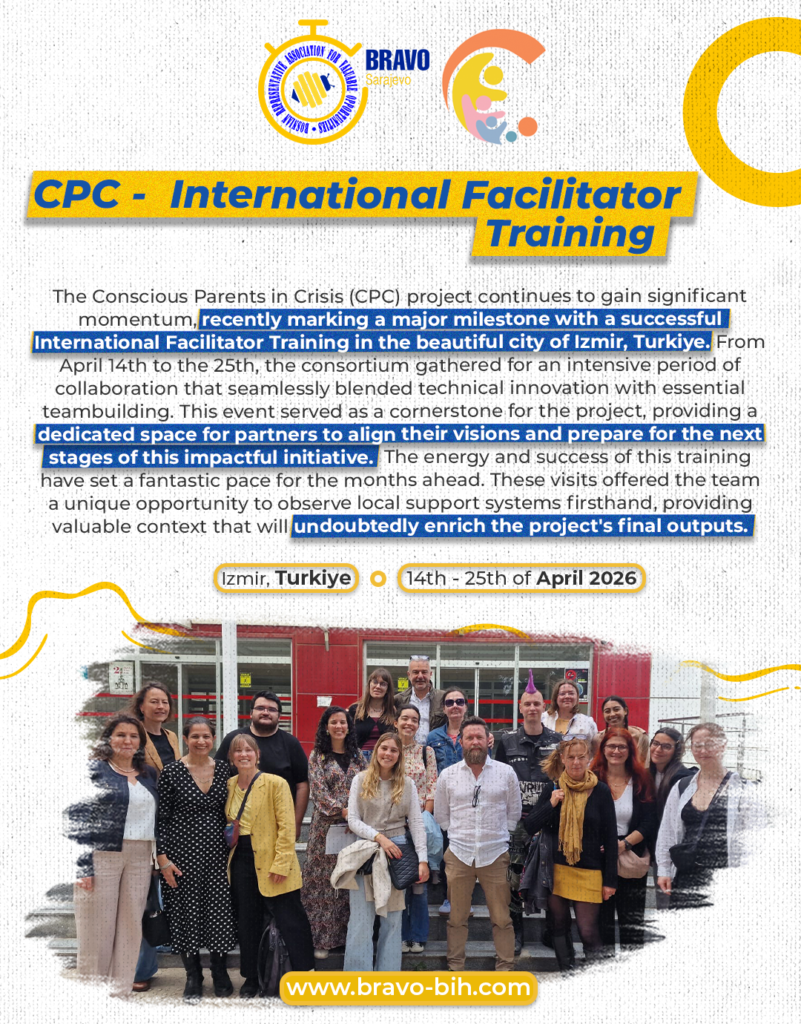
The Conscious Parents in Crisis (CPC) project continues to gain significant momentum, recently marking a major milestone with a successful International Facilitator Training in the beautiful city of Izmir, Turkiye.
From April 14th to the 25th, the consortium gathered for an intensive period of collaboration that seamlessly blended technical innovation with essential teambuilding. This event served as a cornerstone for the project, providing a dedicated space for partners to align their visions and prepare for the next stages of this impactful initiative.
The sessions were defined by practical, hands-on workshops where the consortium focused on refining the testing methodologies that will serve as the foundation for the project’s future work. A primary focus of the gathering was the development of the official Learning Kit, a comprehensive resource designed to be a key output of the project. By testing these tools in a collaborative environment, the team ensured that the final resources would be both practical and effective for facilitators working with parents in crisis.
Strategic planning was also a top priority throughout the training, allowing the consortium to map out a clear and sustainable path for the upcoming project phases.
BRAVO was well-represented during the event by the project coordinator Kenan Junuzovic and staff member Kerem, both of whom contributed their expertise to the methodological discussions and the overall planning process. Their participation ensured that our organization remains deeply integrated into the project’s development and implementation. Beyond the classroom-style workshops, the program was enriched by a series of insightful study visits organized by our Turkish partner, Izmir Katip Celebi University. These visits offered the team a unique opportunity to observe local support systems firsthand, providing valuable context that will undoubtedly enrich the project’s final outputs.
We would like to express our sincere gratitude to Izmir Katip Celebi University for their exceptional hospitality and professional organization, which created an ideal environment for learning and international cooperation. The energy and success of this training have set a fantastic pace for the months ahead. We are more motivated than ever to finalize our upcoming resources and continue our mission of supporting families across borders, looking forward to everything we are yet to achieve within this incredible project.
More about the project
The CPC project is designed to empower parents to start and manage learning groups effectively, providing an alternative or supplement to traditional public education. It’s particularly relevant in crisis situations where conventional educational structures may falter. The project envisions learning groups as small, organized communities that deliver regular educational content outside the public system. Examples include small private school communities in Hungary that follow the national curriculum but employ alternative teaching methods. Similar home-schooling communities exist in Portugal and Germany.
The project’s operations span several phases, beginning with preparations like kick-off events and local knowledge transfer seminars. The initial stages focus on data collection through research on existing student groups across various countries. Each partner country is tasked with examining specific aspects of these groups to create a collection of best practices.
These practices will then be synthesized into a comprehensive Learning Group Management (LGM) methodology. The final output will be a training manual alongside facilitator training sessions. The methodology will cover six key themes ranging from building a learning community to integrating digital tools and supporting children with special needs.
The project also involves creating a robust digital presence, including a project website and social media engagement to foster a wider community interaction and dissemination of project results. Fieldwork will follow, with local and international training sessions for facilitators who will then train parents directly. The aim is to make these learning groups viable and sustainable options for parents looking to supplement their children’s education or provide a solid alternative during disruptive times.
Ultimately, the project not only addresses the educational needs of children but also equips parents with the necessary tools and knowledge to lead these initiatives effectively. The focus on a supportive learning environment, blended learning methods, and inclusive education practices underscores the project’s commitment to a holistic educational approach. This initiative is aligned with the EU’s educational objectives and offers a practical response to the growing need for adaptable educational formats in light of global challenges like climate change and societal disruptions.
#BRAVO #BRAVOBIH #MAKETHEWORLDWONDER #ERASMUSPLUS